Education
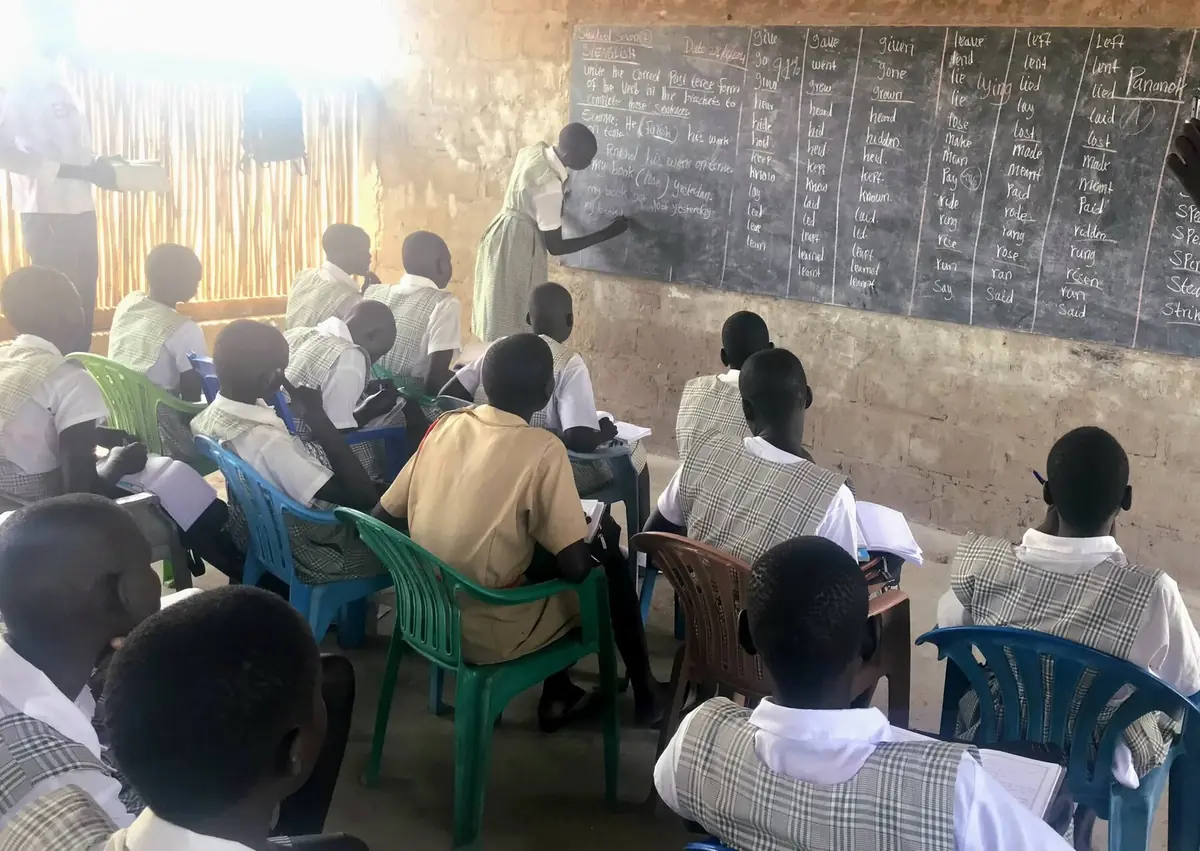
HelpEducation South Sudan provides training to teachers on basic principles of pedagogy, leadership and school governance to enhance their capacities for quality delivery of education to the children of South Sudan. In rural marginalized villages, Protection of Civilians sites, Internally Displaced Persons Camps, we construct temporary child friendly learning spaces and donate reference textbooks and exercise books to public primary and secondary schools. We campaign for girl child education in both rural and urban settlements (with special focus on community girl schools now operating in Terekeka and Mundri States). We promote education through objective research to understand the needs of education sector and required resources. We also provide and campaign for inclusive education both in rural and urban settlements in addition to providing special training on life skill to disabled youth who are out of school.
Child Protection in Education
Under this theme HESS focuses on holistic development of children welfare and protection of their rights, the following interventions are planned over the time:
- Street outreach, counseling, rehabilitation and reintegration into the respective societies
- Child rights education and protection awareness at different levels and different stakeholders.
- Development of safe learning places for children at schools, hospitals, and community centers.
- Children confidence building programs, walks, sessions, campaigns, and trainings.
- Development of children groups and developing leadership skills in them.
- Family Tracing and Reunification
Reproductive Health & HIV Prevention
This thematic area entails following important features for development:
- Establishment of school based health centers at remote areas where people don’t have access to the health facilities.
- Develop awareness campaigns for HIV prevention, reproductive health; life skills based education and sexual rights in both primary and secondary schools.
- Develop immunization programs for venereal diseases and epidemics.
- Organizing events for public health along with government.
Gender Equality in Education
Gender equality refers to the absence of discrimination on the basis of sex. Ideally, gender equality is when one sex is not routinely privileged or prioritized over the other, and all people are recognized, respected and valued for their capacities and potential as individuals and members of society. Further, gender equality is when girls, boys, women, and men have equal rights, obligations and opportunities to: security and good health; a viable livelihood and dignified work; participate in the care of home and dependent family members; take active part in public and political life; learn and participate in relevant education; and live a life free from violence. We advocate for gender equality in all aspects of life in South Sudan.
Health & Nutrition in Education
To ensure delivery of these interventions, HESS collaborates with local governments, multilaterals, grassroots non-governmental organizations and others to identify and address; maternal, newborn and reproductive health, maternal, infant and young child nutrition and adolescent sexual and reproductive health. These thematic areas are aiming to help improve health condition of people and malnourished children in rural villages of South Sudan. Malnutrition is a common phenomenon in poor countries like South Sudan; resources are limited to few individuals who enriched themselves on the expenses of the population.
WASH in Education
School children have a right to basic WASH facilities such as improved latrine, safe drinking water and hand washing facilities. When these facilities are available and functioning effectively, children can learn better and bring concepts and practices in respect to sanitation and hygiene back to their families. In all rural villages, Water, Sanitation and Hygiene are the most causes of variety of diseases affecting the population. Due to poor sanitation and hygiene there is prevalence of diarrheal diseases affecting children and adults. Girls drop out of schools at adolescent stage due to poor sanitation and unhygienic environment. We advocate for WASH facilities both in schools and at homes.
Women & Youth Empowerment in Education
Women Empowerment aims at promotion of women to take up leading role in democratic norms and culture in the operational area. Two types of activities are undertaken in this theme: one aim at building capacities of women and communities and their groups to engage effectively with government and other stakeholders for getting their constitutional and legal social, economic and political rights, the other aims at working directly with state institutions for creating an environment that can guarantee the rights of women citizens. It also focuses on enhancing women income generation skills through capacity building and micro credit. Under this program following sub activities are also conducted:
- Formation of local women groups and their capacity building.
- Scholarship for female students who want to further their studies
- Granting loan to organized group of women
Peace Building in Education
Peace building is an intervention that is designed to prevent the start or resumption of violent conflict by creating a sustainable peace. We promote dialogue between the communities in conflict to each other to solve their differences and live in harmony.